You have spent your whole life rehearsing conversations before they happen, studying other people’s facial expressions like a language you never quite learned natively, and coming home from ordinary social situations feeling like you have run a marathon. Nobody around you seems to find any of this exhausting. You have started to wonder if something is different about how your mind works, and whether that something has a name.
For a significant number of women and people assigned female at birth, it does. Frontiers in Psychiatry’s 2026 editorial on women in psychiatry describes the long-standing underdiagnosis and misdiagnosis of autistic females as a matter of clinical and scientific urgency, noting that camouflaging strategies used to mask autistic traits delay diagnosis and increase vulnerability to anxiety, depression, and burnout. This blog covers the symptoms of adult autism in females that most often go unrecognised, why autism masking in women happens in the first place, and what genuine support looks like once the pattern is finally named.
Why Symptoms of Adult Autism in Females Look So Different
Autism was defined and studied for decades using predominantly male clinical samples, which shaped the diagnostic criteria still in use today. A 2026 paper in Frontiers in Psychiatry argues that the apparent gender gap in autism prevalence is largely attributable to underdiagnosis and misdiagnosis in females, rather than a genuinely lower incidence of the condition itself.
Psychiatry Advisor’s clinical review notes that in girls and women, autism symptoms tend to be more muted and are frequently confused with ADHD, depression, anxiety, or social anxiety. Prenatal hormonal differences may also shape brain development in ways that give women heightened skills of observation, imitation, and communication, skills that make masking more effective and diagnosis correspondingly harder to reach.
Autism Masking in Women: How It Actually Works
Understanding autism masking in women is central to recognising the pattern at all, since masking is specifically designed to hide the very traits a clinician would look for.
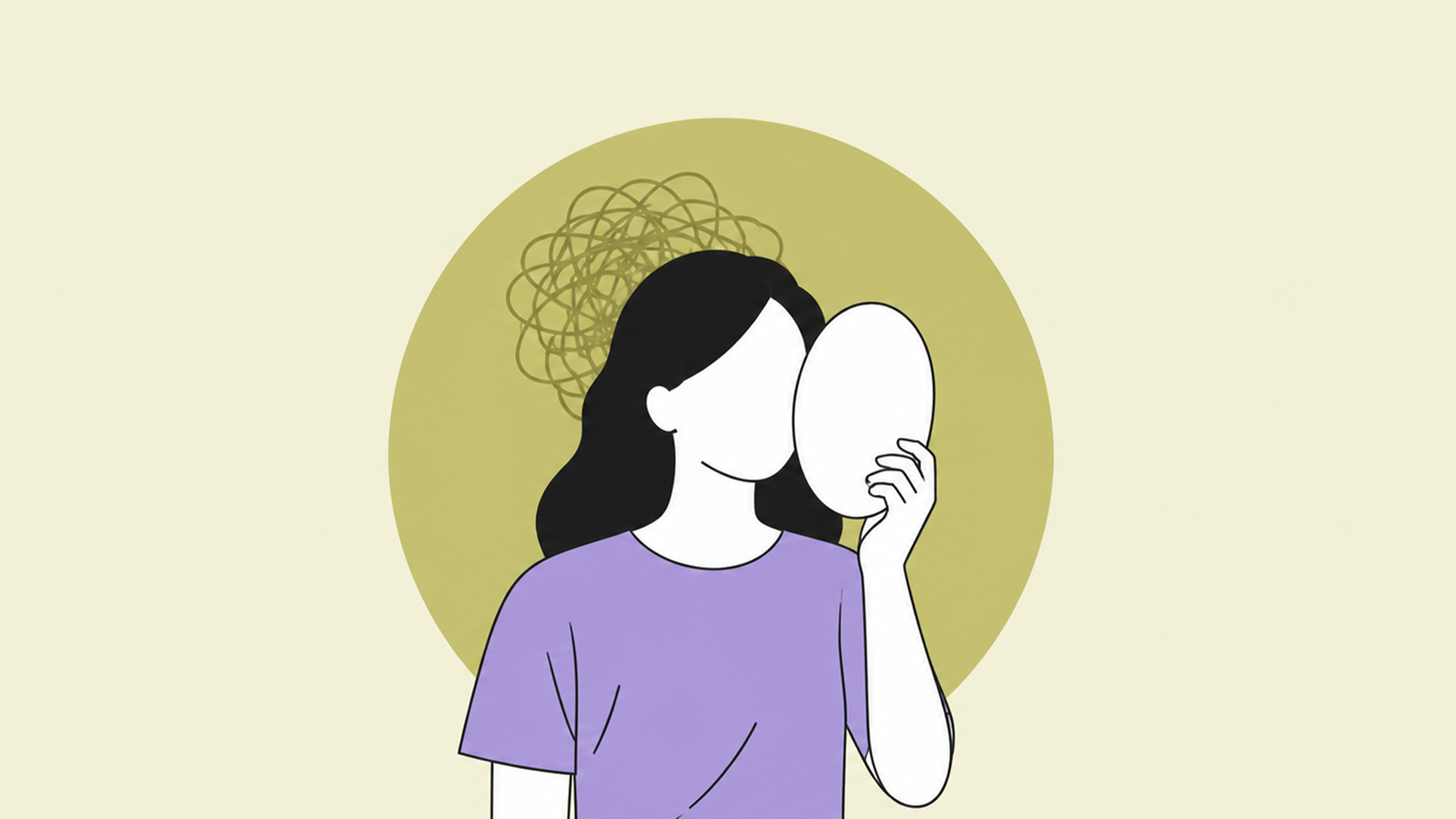
Masking typically involves consciously studying and copying socially expected behaviour: rehearsing conversations in advance, deliberately practising eye contact that does not come naturally, and imitating the facial expressions and body language of people around them. Research on undiagnosed autism in adult females from UCLA Health notes that autistic girls tend to be more socially motivated than boys to fit in, learning acceptable behaviour by closely observing television, films, and the people around them.
A systematic review and meta-analysis on camouflaging confirmed that autistic females consistently show higher camouflaging scores than autistic males on standardised measures, and that this masking requires genuinely high cognitive ability, self-monitoring, and inhibition of natural behaviour to sustain. This is not simply being sociable. It is effortful, ongoing performance.
Female Autism Diagnosis: Why It So Often Comes Late
A female autism diagnosis often does not arrive until adulthood, sometimes after years of other labels first.
- Family, teachers, and physicians frequently miss the signs because masking makes symptoms appear far milder than they actually are
- Diagnostic tools and criteria were developed predominantly around male presentations, and often fail to capture more typically feminine expressions of autism.
- Clinicians may dismiss or overlook symptoms, particularly when a woman presents as articulate, socially capable, or high-achieving
- Autistic women are frequently diagnosed instead with borderline personality disorder, depressive disorder, or bipolar disorder before autism is ever considered.
A 2025 study published in Autism in Adulthood surveying 253 autistic adults found that while camouflaging predicted significantly higher anxiety, stress, and depression, masking behaviour itself was not the primary driver of delayed diagnosis. Gender stereotypes and inadequate clinical assessment tools were identified as the bigger obstacles, meaning the diagnostic system itself, not just the masking, needs to change.
If you have spent years feeling like you were translating yourself into a language everyone else seemed to speak natively, that exhaustion deserves real investigation, not more self-doubt. The Therapy Park offers neurodivergent-affirming assessment and therapy for adults exploring a late autism diagnosis, in Kolkata and online across India.
Late Diagnosed Autism Symptoms in Daily Life
The late-diagnosed autism symptoms that most commonly surface in adult women include:
- Chronic exhaustion after social situations that seem to leave everyone else unaffected
- A lifelong sense of performing socially rather than participating naturally
- Sensory sensitivities to light, sound, or texture that were dismissed in childhood as fussiness
- Intense, deeply absorbing interests that others sometimes describe as excessive
- Difficulty with unstructured social situations, despite appearing capable in structured, rehearsed ones
- A pattern of close, one-on-one friendships rather than larger social groups
Autistic Burnout Women Experience After Years of Masking
Sustained masking has a cost, and autistic burnout women describe it consistently: a state of profound exhaustion, reduced functioning, and loss of previously masked skills, often triggered by an accumulation of unaddressed sensory and social demands.
Unlike ordinary tiredness, autistic burnout does not resolve with a weekend of rest. It typically requires a genuine reduction in masking demands and sensory load to recover from, which is one of the strongest arguments for pursuing a female autism diagnosis, not for the label itself, but for the permission it can give to stop performing constantly.
Autism Camouflaging: Naming the Pattern Without Shame
Recognising autism camouflaging in yourself is not about assigning blame, either to yourself or to the systems that missed it. It is about understanding a genuinely effortful adaptation for what it is.
Camouflaging developed for good reason. It allowed navigation of environments not built with neurodivergent needs in mind. But a lifetime of autism camouflaging also comes at a real cost to identity, energy, and mental health, and naming the pattern is usually the first step toward finding environments and relationships where less of it is required.
Understanding your own neurology, whether through formal assessment or supportive exploration, is not about fixing something broken. It is about finally getting an accurate map. The Therapy Park offers support for adults navigating late autism recognition and its impact on identity and relationships, in Kolkata and online across India.
Frequently Asked Questions
What are the most common symptoms of adult autism in females?
The most consistently reported symptoms of adult autism in females include chronic exhaustion after socialising, a lifelong sense of performing rather than participating naturally, sensory sensitivities, intense specific interests, and difficulty with unstructured social situations despite appearing capable in structured ones. These often go unrecognised because they are hidden behind effective masking.
Why does autism masking in women delay diagnosis?
Autism masking in women involves consciously studying and imitating socially expected behaviour, which makes symptoms appear far milder to outside observers, including clinicians. Research shows this masking requires significant cognitive effort and is strongly linked to underdiagnosis, though inadequate diagnostic tools and gender stereotypes are considered the larger structural barrier.
What does autistic burnout look like in women?
Autistic burnout in women typically involves profound exhaustion, reduced functioning, and loss of previously masked skills, triggered by sustained social and sensory demands. Unlike ordinary tiredness, it does not resolve with rest alone and usually requires a genuine reduction in masking to recover.
Is it worth pursuing a female autism diagnosis as an adult?
Many adults find that a female autism diagnosis provides genuine relief and self-understanding, along with permission to reduce masking and access appropriate accommodations. It is a personal decision, but research consistently links unrecognised autism with elevated anxiety, depression, and burnout, making assessment worth considering if the pattern feels familiar.
Final Thoughts
The exhaustion of constantly translating yourself into a version other people recognise is not a personality trait. For many women, it is the lived experience of undiagnosed autism, hidden effectively enough that even they did not always recognise it for what it was. Understanding symptoms of adult autism in females is not about applying a label for its own sake. It is about finally having language for an experience that has been real all along.
At The Therapy Park, neurodivergent-affirming assessment and support are available for adults exploring autism, ADHD, and the intersection of masking, identity, and mental health. In-person in Kolkata and online across India.