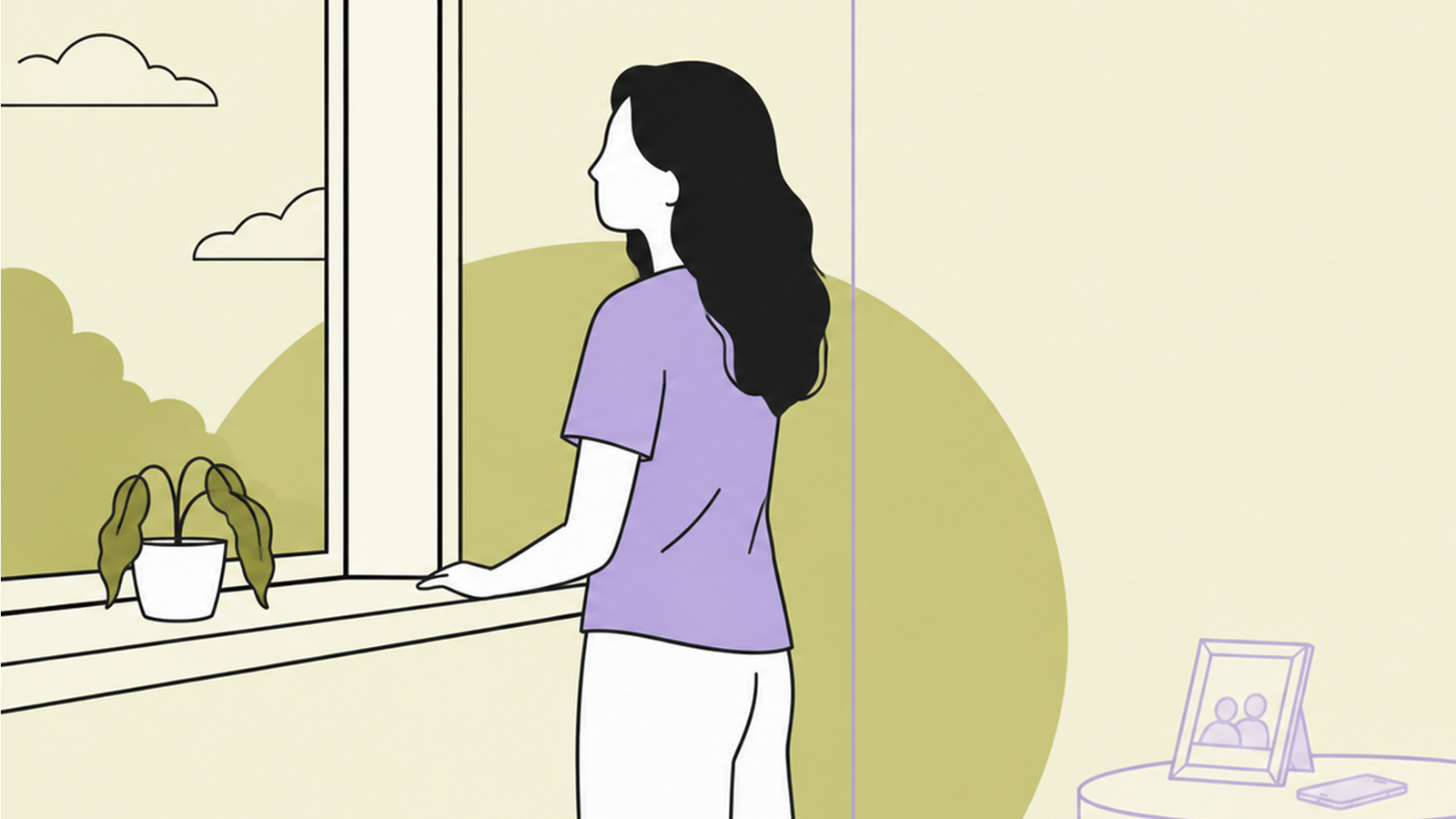
The conversation is happening in front of you, and you are technically present for it, but something has gone quiet on the inside. The things that used to land- a partner’s frustration, a friend’s excitement, your own sadness- arrive muffled now, as though behind glass. You are not sure when this started. You are not sure it counts as a problem, since nothing dramatic happened. But something has clearly shifted.
This is emotional detachment in relationships, and one of the genuinely difficult things about it is that it can mean several different things at once: a self-protective response to something painful, a symptom of burnout, or, in some cases, a sign of something that needs closer clinical attention. This blog covers what emotional detachment in relationships actually looks like, the difference between emotional detachment and burnout, and what genuinely helps you reconnect.
Signs of Emotional Detachment
The signs of emotional detachment often build gradually enough that they are hard to notice until someone else points them out, or until the distance has become uncomfortable even to the person experiencing it.
- Going through the motions of a relationship, showing up, doing the tasks, without the emotional charge that used to accompany them
- A muted or delayed response to things that would normally provoke joy, sadness, or frustration
- Feeling like an observer of your own relationship rather than a participant in it
- Reduced interest in a partner’s day, opinions, or emotional state, alongside a vague sense of guilt about that reduced interest
- Difficulty accessing warmth even in moments that used to produce it reliably
Emotional Numbness Causes: Why the Shutdown Happens
Understanding emotional numbness causes starts with recognising that numbness is rarely random. It is usually functioning as protection against something.
Clinical writing on emotional numbness describes it as typically an unconscious protective response to difficult emotions, whether driven by anxiety, stress, or trauma, and frequently understood as a form of dissociation that allows the mind to protect itself from emotional pain without a conscious decision being made to do so. Chronic or acute stress can overwhelm the system to the point of collapse, with emotional numbness as the resulting state.
The difficulty is that blocking painful feelings tends to block the capacity to feel much of anything, including the good feelings a relationship is supposed to offer. Among the common causes of emotional numbness are unresolved relational conflict, accumulated resentment that was never voiced, past relational trauma being echoed by a current dynamic, and simple, prolonged emotional overextension.
Emotional Detachment vs Burnout: Telling Them Apart
The emotional detachment vs burnout distinction matters because the underlying cause shapes what actually helps.
Research on psychological detachment and depressive symptoms found that emotional exhaustion, a core component of burnout, plays a specific mediating role between psychological detachment and depressive symptoms, and that self-compassion moderates how much that exhaustion translates into depression. In other words, burnout-driven detachment is often reversible with adequate rest, boundaries, and self-compassion, because the underlying capacity for connection is intact, just depleted.
A separate study on marital burnout found that attachment style significantly predicts emotional detachment within relationships, with avoidant attachment patterns in particular associated with limiting a partner’s closeness as a form of psychological self-defence. This version of emotional detachment vs burnout is less about depletion and more about a longstanding relational pattern, which typically requires different, deeper work than simple rest and recovery.
Whether the detachment is exhaustion, an old pattern, or something else entirely, figuring out which one it is changes what actually helps. The Therapy Park offers individual and couples therapy for emotional detachment, attachment patterns, and burnout, in Kolkata and online across India.
Self-Protection or Shutting Down: When Detachment Is Doing Its Job
Not all emotional detachment in relationships is a problem to be immediately fixed. Sometimes it is genuine, appropriate self-protection or shutting down in response to a relationship that has become unsafe, dismissive, or repeatedly hurtful.
- If the detachment developed after a specific breach of trust or sustained mistreatment, it may be functioning exactly as it should, as a boundary.
- If it lifts in other, safer relationships while staying present in one specific dynamic, that is meaningful information about the relationship itself, not just about you.
- If it is accompanied by relief rather than distress, it may be signalling something worth listening to rather than overriding.
The distinction between healthy self-protection or shutting down and a pattern that has outlived its usefulness is not always obvious from the inside. This is one of the more common reasons people seek an outside perspective.
How to Reconnect Emotionally: What Actually Helps
When the detachment is unwanted, learning how to reconnect emotionally tends to work better as a gradual process than a single decisive effort.
- Naming the shift out loud: Telling a partner or close friend that something has gone quiet inside, even without fully understanding why yet, interrupts the isolation that numbness tends to produce
- Rebuilding small moments of low-stakes connection: Rather than forcing intensity, brief, undemanding moments of contact, sitting together, a short walk, tend to rebuild capacity more reliably than trying to manufacture a big emotional breakthrough
- Addressing the underlying exhaustion directly: If burnout is the primary driver, rest, boundaries, and reduced obligation often need to come before emotional reconnection is even possible.
- Exploring the origin of the pattern with support: If detachment traces back to an attachment pattern or past relational trauma, that work is rarely fast, and professional support meaningfully improves outcomes.
At The Therapy Park, therapy for emotional detachment in relationships, burnout, and attachment patterns is available with practitioners who help you understand which one you are actually dealing with. In-person in Kolkata and online across India.
Frequently Asked Questions
What causes emotional detachment in relationships?
Emotional detachment in relationships can stem from several sources: burnout and emotional exhaustion, unresolved conflict or resentment, past relational trauma being echoed by a current dynamic, or an underlying attachment pattern such as avoidant attachment. Identifying which cause fits your situation shapes what actually helps.
How can I tell emotional detachment vs burnout apart?
The core of emotional detachment vs burnout comes down to depletion versus pattern. Burnout-driven detachment tends to lift with adequate rest, reduced obligation, and self-compassion, because the capacity for connection is intact but depleted. Pattern-driven detachment, often linked to attachment style, tends to persist even after rest, because it is protecting against a longer-standing fear of closeness.
Is emotional detachment always a bad sign?
No. Self-protection or shutting down can be an appropriate response to a relationship that has become unsafe or repeatedly hurtful. If detachment lifts in other, safer relationships while persisting in one specific dynamic, that pattern is worth paying attention to as information about the relationship, not simply as a personal problem to override.
How do I actually reconnect emotionally with someone?
Effective approaches to how to reconnect emotionally start small: naming the shift out loud, rebuilding low-stakes moments of connection rather than forcing intensity, and addressing underlying exhaustion before expecting warmth to return on its own. When the detachment traces back to an attachment pattern or past trauma, professional support significantly improves the process.
Final Thoughts
Not caring the way you used to is rarely as simple as it sounds. Emotional detachment in relationships is sometimes protection, sometimes exhaustion, and sometimes a longer-standing pattern asking for real attention. None of these is a character flaw. All of them are workable, once you understand which one you are actually dealing with.
At The Therapy Park, individual and couples therapy for emotional detachment, burnout, and attachment-related patterns is available with practitioners who help untangle the difference. In-person in Kolkata and online across India.