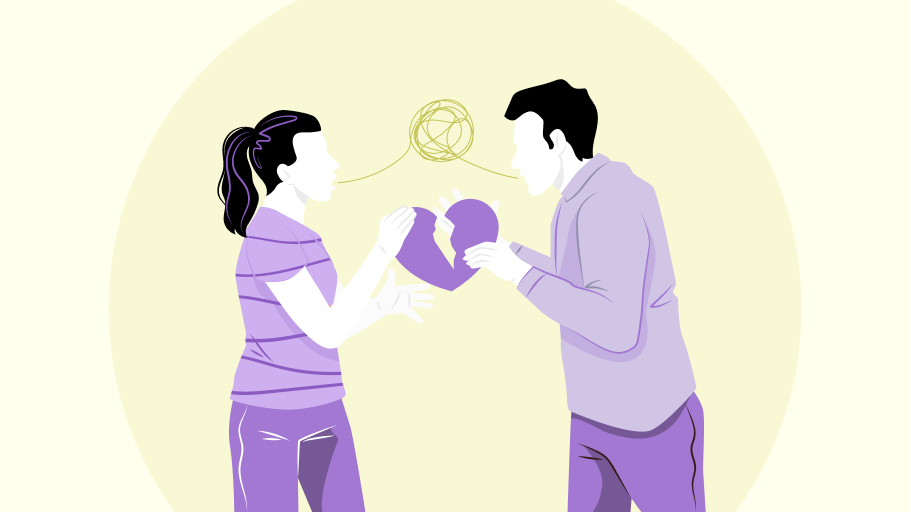
There is a threshold in many people’s minds that a relationship has to cross before it qualifies as a problem. Something physical, something obviously extreme, something that would be immediately legible to everyone around them as wrong. Below that threshold, a lot of damage accumulates without being named.
Most people in toxic relationships do not call them that for a long time, because the relationship does not look like what they have been told a toxic relationship looks like. There is no violence. There may be love, or what feels like it. There are good periods that make the hard ones easier to dismiss. And there is a slow, steady erosion of something that is hard to pinpoint: a sense of self, a confidence in one’s own perceptions, a freedom to simply exist without monitoring. Research by Psychology Today (2025) confirms that chronic emotional manipulation, including gaslighting, produces measurable long-term impacts on anxiety, self-trust, and identity. This blog covers the toxic relationship signs that are most often missed, and what they cost over time.
What Makes a Relationship Toxic: The Definition That Matters
A relationship is toxic when one person’s patterns of behaviour consistently harm the other person’s psychological wellbeing, sense of self, or ability to function, and when those patterns are sustained rather than isolated.
This definition matters because it includes relationships that are harmful without being abusive in the classical sense. A partner who is not physically violent but who regularly undermines, dismisses, controls, or manipulates is in a toxic dynamic even if neither person has used the word “abuse.” The impact on the person receiving the behaviour is what makes it toxic, not the label applied to the behaviour.
Toxicity is also not always intentional. Some people who behave in damaging ways are themselves poorly regulated, unaware of their impact, or repeating patterns from their own history. That does not make the behaviour less damaging. It makes the situation more complex, and more likely to be tolerated longer than it should be.
Gaslighting in Relationships: The Most Damaging Thing You Might Not Recognise
Gaslighting in relationships is the practice of causing someone to question their own perceptions, memories, and sanity, typically to avoid accountability or maintain control. The term comes from a 1938 play in which a husband manipulates his wife into believing she is losing her mind.
Research by Newport Institute found that abusers who gaslit their partners also exhibited high levels of emotional detachment and anti-social behaviours, and that gaslighting functions as a tool to maintain power and control. The core experience for the person being gaslit: they begin to trust their own perceptions less and the gaslighter’s version of reality more.
Common gaslighting in relationships patterns include:
- Denying events that happened: “That never happened. You are making things up.”
- Minimising your emotional response: “You are overreacting. You are too sensitive.”
- Reframing your concerns as attacks: “Here you go again, criticising me.”
- Using your mental health against you: “You are not remembering correctly because of your anxiety.”
The cumulative effect is that the person who is being gaslit comes to doubt their own mind. They apologise more, question themselves constantly, and feel they are the problem in the relationship.
If you are reading this and recognising your relationship, the confusion you are feeling is not a character flaw. It is a predictable response to specific patterns. The Therapy Park offers therapy for people navigating toxic relationships, emotional abuse, and the long road back to trusting themselves. In Kolkata and online across India.
Emotional Abuse in Relationships: What It Looks Like Day to Day
Emotional abuse in relationships does not always look like rage or cruelty. Much of the time it is quieter: a consistent pattern of diminishment, control, and invalidation that accumulates over time.
- Contempt and criticism: Regular mockery, dismissal of your opinions, eye-rolling, put-downs framed as jokes. The person is not occasionally unkind. They are consistently condescending
- Stonewalling and withdrawal: Refusing to engage in conversation, giving the silent treatment, using emotional withdrawal as a punishment
- Monitoring and control: Checking your phone, questioning where you go and who you see, creating rules about how you spend time. This can feel like protectiveness before it is recognised as control
- Isolation: Gradually separating you from friends and family, either through direct criticism of those relationships or by creating conflict whenever you prioritise them
- Emotional manipulation:
John Gottman’s research on signs of a controlling partner identified contempt as the single strongest predictor of relationship breakdown. But contempt also does damage long before the relationship ends: it erodes the self-worth of the person on the receiving end in ways that persist long after the relationship.
Signs of a Controlling Partner That Are Easy to Rationalise
Control in relationships often does not present as control at the beginning. It presents as care, attention, and investment. Here are the signs of a controlling partner that are most often explained away:
- Jealousy framed as love: “They are like that because they care so much.” Jealousy becomes a tool of control when it requires you to change your behaviour to manage the other person’s emotional state
- Constant contact requirements: Needing to know where you are at all times, getting upset when messages are not answered immediately. Framed as closeness but functioning as monitoring
- Decision-making taken over: Consistently overriding your choices about money, time, social plans, or appearance. Often framed as “I just want what is best.”
- Your needs consistently minimised: What you want rarely gets prioritised. When you raise this, it is dismissed or countered with a list of what the other person does for you
- Accountability avoidance:
Toxic Relationship Effects on Mental Health
Toxic relationship effects on mental health are well-documented and often long-lasting. The experience of sustained emotional manipulation, control, or invalidation produces measurable changes in how people think about themselves and others.
- Chronic anxiety: walking on eggshells, hypervigilance about the other person’s mood, anticipating conflict
- Depression: the cumulative erosion of self-worth and pleasure
- Trauma responses: intrusive memories, emotional numbing, or hyperreactivity that persists after the relationship ends
- Difficulty trusting own perceptions: a legacy of gaslighting that continues to affect how the person processes their own experience
Psychology Today’s 2025 research review noted that chronic gaslighting specifically creates “trauma that is ongoing and not addressed,” leading to re-traumatisation as the abusive pattern repeats. The mental health consequences are not symptoms of weakness. They are predictable responses to sustained psychological harm.
Leaving a Toxic Relationship: What Makes It Hard
Leaving a toxic relationship is often harder than people on the outside understand. Several factors maintain people in damaging dynamics beyond a simple cost-benefit analysis:
- Intermittent reinforcement: The alternation of good periods and bad periods is more psychologically compelling than consistent negativity. The hope generated by the good periods keeps people engaged through the bad ones
- Eroded self-trust: After sustained gaslighting or control, the person’s confidence in their own judgment has been undermined. They are not sure they are reading the situation correctly
- Shame and stigma: Particularly in cultural contexts where relationship failure is stigmatised, or where the person feels they should have known better
- Practical and material entanglement: Shared finances, housing, children, or community make physical exit complicated even when the psychological decision is made
- Fear of the other person’s response:
Recognising these dynamics for what they are, rather than interpreting them as personal weakness, is essential both for self-compassion and for making the decisions that are actually available.
Frequently Asked Questions
What are the main toxic relationship signs?
The most consistent toxic relationship signs are: consistent contempt or dismissal, gaslighting or reality-distortion, monitoring and control of time and social contact, isolation from support networks, emotional manipulation through guilt or threats, absence of genuine accountability, and a progressive erosion of your sense of self and confidence in your own perceptions. Not all of these need to be present. A pattern of even two or three, sustained over time, constitutes a toxic dynamic.
Is gaslighting always intentional?
Gaslighting in relationships is not always a calculated strategy. Some people who gaslight have genuinely poor insight into their own behaviour, or learned these patterns in environments where they were modelled. Intentionality does not determine the impact. Whether deliberate or not, the consistent distortion of someone’s reality causes real psychological damage.
Can a toxic relationship be fixed?
Some relationships can shift significantly if both people recognise the patterns and commit to genuine change, typically with professional support. The conditions for change include the person exhibiting the toxic behaviour taking genuine accountability (not just during arguments), sustained behavioural change over time (not just good intentions), and the affected person having space to safely assess whether the change is real. Many toxic relationships do not meet these conditions.
What are the mental health effects of leaving?
Leaving a toxic relationship frequently produces a mixed experience: relief and grief, clarity and disorientation, freedom and anxiety. The toxic relationship effects on mental health do not always disappear immediately after leaving. Many people experience delayed processing of what they experienced, grief for the relationship they hoped for, and ongoing trust difficulties. Therapy is often most valuable after leaving, when there is finally safety to process what happened.
Final Thoughts
It does not have to be abuse in the conventional sense to be wrong. The slow erosion of self-trust, the relentless second-guessing, the sense of walking on eggshells indefinitely: these are harms, even when they are not dramatic. Recognising the toxic relationship signs for what they are is not a verdict on the other person. It is information about a dynamic that is costing you something real.
At The Therapy Park, therapy for people navigating or recovering from emotional abuse in relationships, gaslighting, and toxic relational patterns is available with practitioners who understand the complexity of these situations. In-person in Kolkata and online across India.