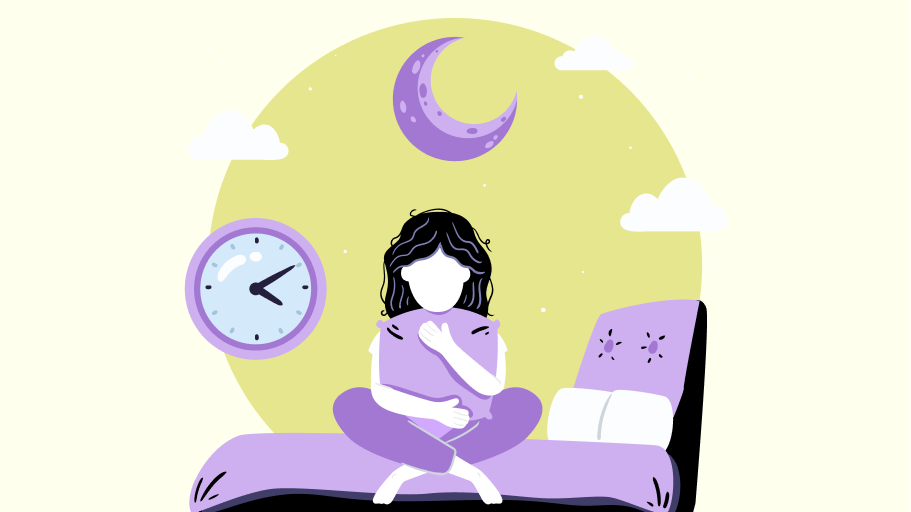
Three in the morning, and the mind is running a full inventory: tomorrow’s tasks, yesterday’s mistakes, a conversation from months ago that still stings. The body is exhausted. The mind will not stop. A sleeping pill might buy a few hours of unconsciousness, but the racing does not actually stop. It just gets postponed to the next night, and the one after that.
This is precisely why therapy for sleep disorders has become the recommended first-line treatment for chronic insomnia, ahead of medication, in clinical guidelines. Cleveland Clinic confirms that Cognitive Behavioral Therapy for Insomnia (CBT-I) is the go-to treatment for insomnia precisely because it works by changing the sleep-related thoughts and routines that actually maintain the problem, rather than simply sedating the person over them. This blog covers why sleeping pills vs therapy is not really a close contest for long-term outcomes, what CBT for insomnia actually involves, and what the current evidence shows.
Why Sleeping Pills Do Not Fix a Racing Mind
Sleep medications, including benzodiazepines, Z-drugs, orexin receptor antagonists, and sedating antidepressants, work by chemically inducing drowsiness or sedation. What they do not do is address the underlying cognitive and behavioural patterns that produced the racing mind in the first place.
This distinction matters clinically. A person whose insomnia is maintained by anticipatory anxiety about not sleeping, by conditioned wakefulness in bed, or by a racing, ruminative thought pattern will typically find that medication masks the symptom for the night it is taken but leaves the underlying mechanism completely untouched. When the medication stops, or tolerance builds and its effect weakens, the original pattern resurfaces largely unchanged.
There is also a documented cost to relying on medication long-term. A 2025 study published in Sleep Medicine examining a combined treatment approach for patients using sleep medications alongside CBT-I found that structured behavioural treatment supported meaningful reduction in medication and substance dependence for sleep, while directly improving sleep outcomes, evidence that the two approaches are not simply interchangeable options but that therapy for sleep disorders addresses ground the medication cannot reach on its own.
CBT for Insomnia: What It Actually Involves
CBT for insomnia, more precisely known as Cognitive Behavioral Therapy for Insomnia (CBT-I), is a structured, short-term, evidence-based form of therapy for sleep disorders specifically designed to change the sleep routine and the thought patterns surrounding sleep.
The core components typically include:
- Sleep restriction therapy: Temporarily limiting time in bed to match actual sleep time, which paradoxically strengthens the drive to sleep and reduces the fragmented, anxious wakefulness that comes from spending excessive hours in bed not sleeping
- Stimulus control: Retraining the association between bed and sleep, specifically by getting out of bed when unable to sleep rather than lying awake anxiously, which over time weakens the learned link between the bed and wakeful frustration
- Cognitive restructuring: Directly addressing the anxious, catastrophic thoughts that often accompany sleeplessness, such as “I will not be able to function tomorrow” or “I will never sleep properly again,” which themselves generate the physiological arousal that prevents sleep
- Sleep hygiene education: Practical adjustments to routine, light exposure, and pre-sleep habits, though this component alone is generally insufficient without the behavioural and cognitive elements
- Relaxation training: Structured techniques to reduce the physiological arousal that maintains a racing mind at bedtime
If sleep has become something you dread rather than something that simply happens, that pattern is addressable, and it does not require permanent reliance on medication. The Therapy Park offers therapy for insomnia and sleep-related anxiety in Kolkata and online across India.
The Evidence Behind Cognitive Behavioral Therapy for Insomnia
The evidence base for cognitive behavioral therapy for insomnia is substantial and has been growing steadily, and it is the primary reason clinical guidelines now favour therapy for sleep disorders over medication as a starting point.
A 2025 evidence summary in Frontiers in Psychiatry, drawing on the Fudan University Center for Evidence-Based Nursing’s rigorous methodology, systematically reviewed clinical guidelines, systematic reviews, and meta-analyses to confirm CBT-I’s efficacy in improving sleep quality for patients with chronic insomnia, and issued structured, evidence-based recommendations for clinical practice built on that foundation.
A widely cited 2015 systematic review and meta-analysis published in the Annals of Internal Medicine, referenced across the more recent literature, established CBT-I as producing clinically meaningful improvements in sleep onset, sleep efficiency, and wakefulness after sleep onset, with effects that persist well beyond the treatment period itself, unlike the effects of medication, which typically do not.
Importantly, the evidence extends beyond typical adult populations. A 2025 systematic review examining CBT-I effectiveness in individuals with neurodevelopmental conditions including ADHD and Autism Spectrum Disorder, found significant short-term effectiveness across multiple studies, despite this population’s frequent historical exclusion from sleep research. And a 2025 scoping review examining CBT-I in neurodegenerative conditions including Alzheimer’s and Parkinson’s disease found the therapy consistently reduced insomnia severity across randomised trials and pilot studies, with frequent ancillary improvements in mood, anxiety, and daytime functioning.
Chronic Insomnia Treatment: How Access Has Expanded
Chronic insomnia treatment has historically been limited by the availability of trained CBT-I clinicians, but access has expanded significantly through digital delivery formats in recent years.
A 2025 scoping review examining digital CBT-I for shift workers, a population with particularly limited access to in-person behavioural sleep medicine, found that all but one of eleven reviewed studies showed improved sleep quality following digitally delivered treatment, alongside improvements in anxiety, depression, and quality of life.
This matters for accessibility broadly. Chronic insomnia treatment no longer requires geographic proximity to a specialised sleep clinic. Structured, evidence-based programmes delivered through telehealth or app-based platforms have demonstrated outcomes that meaningfully approach those of in-person delivery, expanding the reach of a treatment that remains significantly underutilised relative to medication despite its stronger long-term evidence base.
Insomnia and Anxiety: Why They So Often Travel Together
Insomnia and anxiety share a bidirectional, self-reinforcing relationship that partly explains why the racing mind at 3AM feels so specifically anxious rather than simply restless.
Anxiety activates physiological arousal, elevated heart rate, muscle tension, an alert nervous system, that is directly incompatible with the relaxed state sleep requires. At the same time, sleep deprivation itself measurably increases next-day anxiety and emotional reactivity, meaning a single bad night can set up the conditions for another one, and the cycle compounds. This is why therapy that addresses both dimensions simultaneously, rather than treating sleep and anxiety as entirely separate problems, tends to produce more durable results than either sleep hygiene changes or anxiety management alone.
This is also why CBT-I so frequently produces improvements beyond sleep itself. The cognitive restructuring component directly targets the anticipatory anxiety about sleeplessness (“I won’t be able to function tomorrow”), which is often the specific mechanism keeping insomnia and anxiety locked together in a self-sustaining loop, and it is exactly the kind of mechanism that generic therapy for sleep disorders advice tends to miss.
Frequently Asked Questions
Is therapy really better than sleeping pills for insomnia?
For chronic insomnia, most clinical guidelines now recommend therapy for sleep disorders, specifically CBT-I, as the first-line treatment ahead of medication. Sleeping pills can provide short-term relief but do not address the underlying cognitive and behavioural patterns maintaining the problem, and their effects typically do not persist once the medication is discontinued, unlike therapy, whose benefits tend to hold well beyond the treatment period.
What does CBT for insomnia actually involve?
CBT for insomnia typically combines sleep restriction therapy, stimulus control (retraining the bed-sleep association), cognitive restructuring of anxious sleep-related thoughts, sleep hygiene adjustments, and relaxation training. It is usually delivered over several structured sessions, either in person or through validated digital platforms.
How effective is cognitive behavioral therapy for insomnia?
The evidence for cognitive behavioral therapy for insomnia is strong and consistent across populations, including general adult populations, individuals with neurodevelopmental conditions, and those with neurodegenerative disorders. Recent systematic reviews and meta-analyses confirm significant improvements in sleep quality, sleep onset, and sleep efficiency, with effects that persist beyond the active treatment period.
Can chronic insomnia treatment help if anxiety is part of the problem?
Yes. Because insomnia and anxiety are closely interlinked, treatments like CBT-I that directly address anxious, catastrophic thinking about sleep frequently produce improvements in both sleep quality and daytime anxiety simultaneously. Addressing only one dimension in isolation tends to produce less durable results than an integrated approach.
Final Thoughts
A racing mind at 3AM is not something that gets solved by sedating it into silence. Therapy for sleep disorders, specifically CBT-I, addresses the actual mechanisms, the conditioned wakefulness, the anxious thought patterns, the disrupted sleep drive, that keep the racing going night after night. The evidence for this approach is substantial, growing, and increasingly accessible. Sleep is not something that has to remain a nightly battle.
At The Therapy Park, therapy for insomnia, sleep-related anxiety, and the racing mind that keeps sleep out of reach is available with practitioners trained in evidence-based approaches. In-person in Kolkata and online across India.