Anxiety is the most common mental health condition globally. The WHO estimates it affects roughly 301 million people worldwide, yet most people sit with it for years before seeking support. They second-guess whether what they’re feeling is serious enough. They try harder. They push through. And the anxiety does not go anywhere.
If you’ve been googling whether you need a therapist for anxiety, that question alone is worth paying attention to.
This blog breaks down the signs that it’s time to get support, what working with a therapist actually looks like, and how to begin, especially if the idea of starting feels overwhelming.
What Anxiety Actually Looks Like (It’s Not Always What You Think)
Most people picture anxiety as visible panic – racing heart, trembling hands, difficulty breathing. That does happen. But anxiety shows up in quieter, more persistent ways too, and those are often the ones that go untreated the longest.
Common presentations include:
- A low-level, constant sense of dread that doesn’t attach to anything specific
- Difficulty sleeping because your mind won’t stop running through worst-case scenarios
- Avoidance – skipping situations, conversations, or decisions because they feel too loaded
- Physical symptoms like muscle tension, headaches, or a knot in your stomach that doctors can’t explain
- Reassurance-seeking – needing people to confirm you’re okay, repeatedly
- Irritability or emotional flatness that feels out of proportion to what’s happening
Anxiety also frequently overlaps with depression. A 2015 study in the Journal of Affective Disorders found that nearly 50% of people with a primary anxiety diagnosis also met criteria for depression – which is why many people search for a therapist for depression and anxiety together. Both are often present at once.
Signs It’s Time to Work With a Therapist for Anxiety
There’s no single threshold. But these are reliable signals that anxiety has moved from manageable stress into something that’s shaping your life:
It’s affecting your relationships or work
If anxiety is making you cancel plans, snap at people you care about, miss deadlines, or avoid anything that requires showing up fully – that’s no longer background noise. It’s interference.
You’re managing it with things that make it worse
Alcohol, overwork, compulsive scrolling, or staying constantly busy are common short-term responses to anxiety. They reduce the discomfort temporarily while the underlying anxiety intensifies.
Self-help strategies have stopped working
Journaling, exercise, and breathing exercises are valuable – but they have a ceiling. If you’ve been trying these tools for months without meaningful change, the anxiety likely has roots that need more than lifestyle adjustments.
You’re constantly preparing for something bad to happen
Hypervigilance – scanning for threats, rehearsing catastrophes, never feeling safe – is exhausting. It’s also a pattern that a counsellor for anxiety is specifically trained to work with.
Not sure if what you’re experiencing qualifies as anxiety worth addressing? The Therapy Park offers an initial session where you can talk through what’s been going on, no prior diagnosis needed, no pressure to commit. Book a session
What Therapy for Anxiety Actually Involves
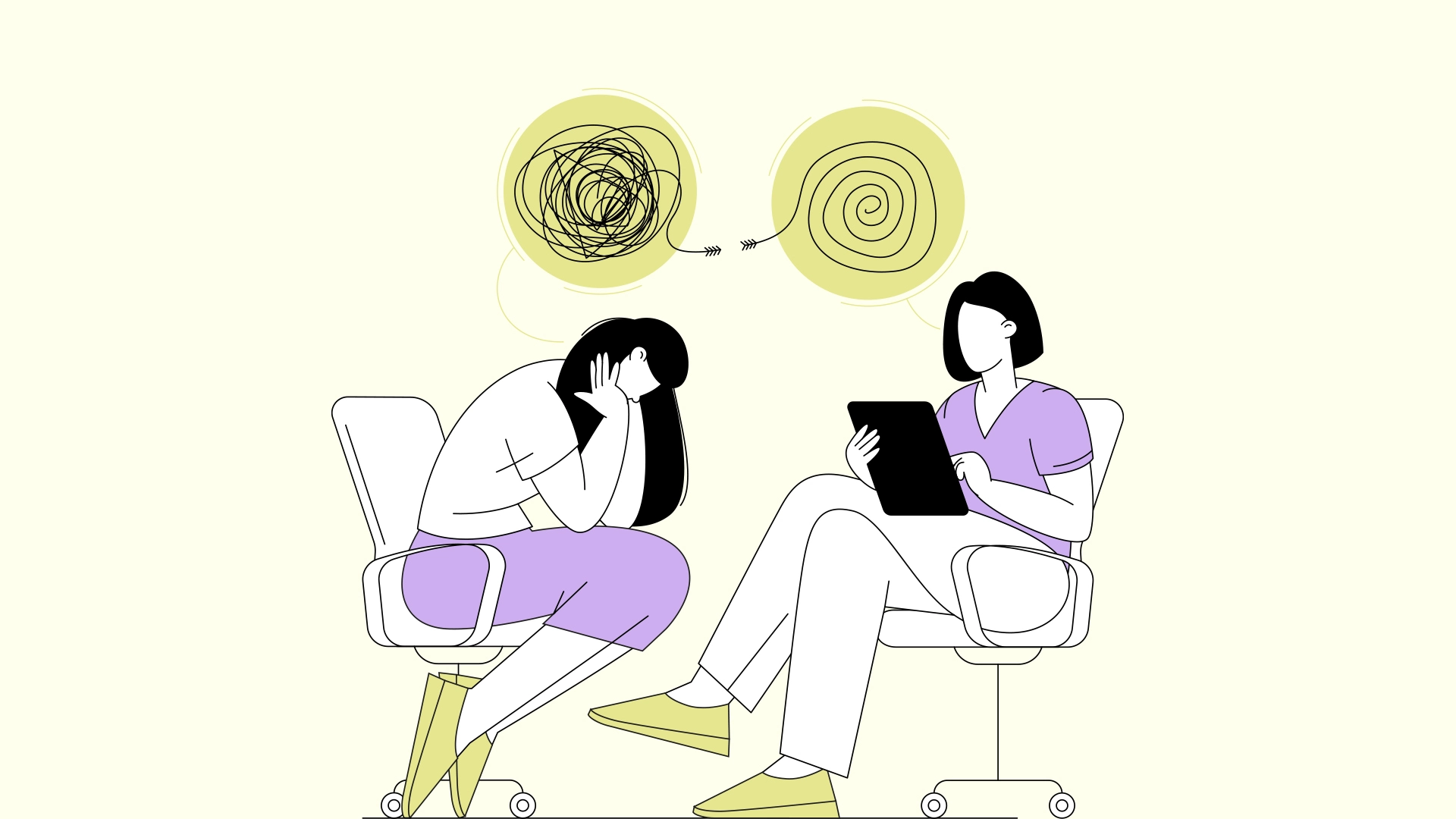
One of the reasons people delay finding a therapist for anxiety is that they don’t know what they’re walking into. Here’s what working with a therapist actually looks like:
CBT for anxiety
Cognitive Behavioural Therapy is one of the most researched approaches in anxiety therapy. CBT for anxiety works by identifying distorted thought patterns – catastrophising, overgeneralising, all-or-nothing thinking – and gradually replacing them with more grounded responses. A 2018 meta-analysis in Psychological Medicine found CBT for anxiety to be effective across generalised anxiety disorder, social anxiety, panic disorder, and OCD. Importantly, CBT is skills-based, meaning you’re building tools you carry beyond the session.
Somatic and body-based work
Anxiety lives in the body as much as the mind. Approaches like somatic therapy and EMDR address the physiological patterns – the tightness, the hyperarousal, the freeze response – that talk-based methods don’t always reach.
Psychoeducation and pattern work
A good therapist for anxiety doesn’t just help you cope in the moment – they help you understand where the anxiety is coming from, how it was learned, and what’s been keeping it in place. That understanding changes how you relate to it.
Anxiety Therapy India: What You Should Know
Access to mental health support in India has historically been limited. The treatment gap sits at approximately 83% for mental health conditions in India, according to the 2016 National Mental Health Survey – meaning most people with anxiety are managing it without any professional support at all.
Anxiety therapy India has expanded meaningfully in recent years, particularly with the growth of online counselling. For people in cities like Kolkata, Mumbai, or Bengaluru, in-person options are more available. For everyone else, anxiety online treatment has made it possible to access qualified practitioners without the constraint of geography.
What to look for in a therapist for anxiety in India:
- A relevant postgraduate qualification (M.Sc./M.Phil. in Clinical or Counselling Psychology, or equivalent)
- Experience working specifically with anxiety disorders – not just general mental health
- A clear approach or modality – CBT, ACT, psychodynamic, somatic, or a combination
- Fee transparency and flexibility, since cost is a real barrier in the Indian context
- Openness about their own background and what they’re trained to handle
Anxiety Online Treatment: Does It Actually Work?
The short answer is yes. A 2018 meta-analysis in the Journal of Psychological Disorders confirmed that online therapy produces outcomes comparable to face-to-face therapy for anxiety, depression, and PTSD. The key variable isn’t the format – it’s the quality of the therapeutic relationship.
Anxiety online treatment works particularly well for people who:
- Experience social anxiety that makes in-person settings harder to manage initially
- Live outside major urban centres where access to qualified therapists is limited
- Have schedules that make fixed in-person appointments difficult
- Want to access a specific therapist regardless of where they’re located
Online sessions should follow the same clinical standards as in-person work, same session length, same modalities, same level of engagement. If a platform or practice is treating online as a lesser alternative, that’s a signal to look elsewhere.
If geography or schedules have been the reason you haven’t started yet, that barrier is gone. The Therapy Park offers online anxiety therapy across India. Start with one session
How to Begin – Without It Feeling Like a Mountain
The first step tends to be the most anxiety-inducing, which is particularly frustrating. Here’s a practical way to approach it:
- Write down what’s been showing up – when it started, what makes it worse, what you’ve already tried. This helps you walk into a first session with something concrete.
- Look for a therapist whose profile matches your actual concern – a counsellor for anxiety with experience in your specific presentation (social anxiety, health anxiety, panic, generalised worry) will be more effective than a general-purpose therapist.
- Don’t treat the first session as a commitment. A first session is an assessment – for both you and the therapist. It’s okay if it takes more than one conversation to find the right fit.
- Clarify logistics upfront – fees, session frequency, whether they offer anxiety online treatment or in-person or both, and what their cancellation policy looks like. Practical clarity reduces the friction of starting.
- Ask about their approach. A good therapist for anxiety should be able to explain how they work in plain language.
Frequently Asked Questions
How do I know if I need a therapist for anxiety or can manage on my own?
If anxiety is affecting your sleep, relationships, work, or daily decisions – and self-help tools haven’t moved the needle after consistent effort – working with a therapist is worth pursuing. You don’t need to be in crisis to qualify for support.
Is CBT for anxiety the only approach that works?
CBT for anxiety has the strongest research base, but it’s not the only effective approach. ACT (Acceptance and Commitment Therapy), psychodynamic therapy, and somatic approaches all have evidence behind them. The right fit depends on your specific pattern of anxiety and what resonates with how you process.
How long does anxiety therapy take?
There’s no single answer. Some people notice meaningful shifts within 8 to 12 sessions. Others work through more layered anxiety over a longer period. Research consistently shows that the therapeutic relationship is the strongest predictor of outcomes – more than any specific technique.
Can I get anxiety online treatment that’s as effective as in-person therapy?
Yes. The research is clear that anxiety online treatment produces comparable outcomes to in-person work when the clinical standards are the same. What matters is the practitioner and the quality of the relationship – not whether you’re in the same room.
What’s the difference between a therapist for depression and anxiety versus a general counsellor?
A therapist for depression and anxiety has specific training and experience working with these presentations – they understand the overlap, the reinforcing patterns, and the approaches that address both. A general counsellor may be helpful for life challenges and stress but may not have the clinical depth for more complex anxiety or mood presentations.
Final Thoughts
Anxiety is not a personality flaw. It’s not something you push through indefinitely. And it’s not something you have to manage alone. A therapist for anxiety works with you to understand where it’s coming from, interrupt the patterns keeping it in place, and build the skills to actually feel different – not just cope better.
If you’ve been sitting with anxiety for a while and nothing you’ve tried on your own has stuck, that’s enough of a reason to reach out.At The Therapy Park, anxiety therapy is offered both in-person in Kolkata and online across India – with practitioners who specialise in anxiety, depression, and the patterns that keep both in place. Book a session when you’re ready.