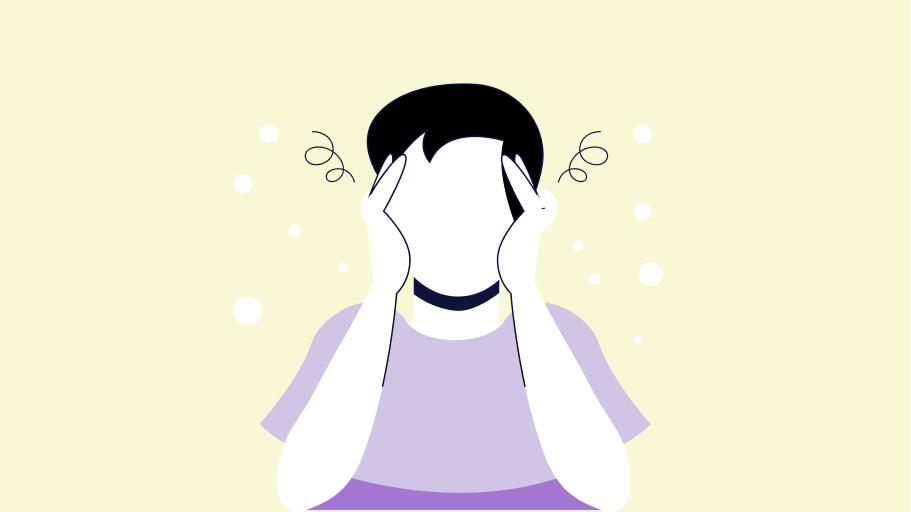
It comes without warning. Your heart slams against your chest, your breathing tightens, the room feels wrong somehow, and a wave of dread arrives that tells you something terrible is happening. For the roughly 35% of people who will experience a panic attack at some point in their lifetime, the first one is almost always terrifying, according to MSD Manual. The most common fear in the moment: that it is a heart attack. The second most common: that they are losing their mind.
Neither is true. But not knowing what is happening makes the experience significantly worse, and that lack of clarity is itself one of the things that can maintain and escalate panic attack symptoms over time. This blog covers what a panic attack actually is, what distinguishes it from other experiences, and what the evidence says about how to stop a panic attack both in the moment and over time.
What Panic Attack Symptoms Actually Feel Like
What does a panic attack feel like? The experience varies between people, but the DSM-5 defines it as an abrupt surge of intense fear or intense discomfort that reaches a peak within minutes, during which at least four of the following occur:
- Palpitations, pounding heart, or accelerated heart rate
- Sweating
- Trembling or shaking
- Shortness of breath or feeling smothered
- Feelings of choking
- Chest pain or discomfort
- Nausea or abdominal distress
- Dizziness, unsteadiness, or feeling faint
- Chills or hot flushes
- Numbness or tingling sensations (paraesthesia)
- Derealisation (feelings of unreality) or depersonalisation (feeling detached from oneself)
- Fear of losing control or going crazy
- Fear of dying: this is clinically significant because it drives the catastrophic appraisal that frequently escalates the attack
The peak-within-minutes feature is diagnostically important. A panic attack builds fast and typically subsides within 20-30 minutes, as documented in clinical literature by the American Counseling Association. This distinguishes it from sustained anxiety, which tends to be lower-intensity but more persistent.
Panic Attack vs Anxiety Attack: What Is the Difference?
The panic attack vs anxiety attack distinction is one of the most searched questions in this space, and the answer requires some precision.
A panic attack is a clinical term with a formal DSM-5 definition. It is sudden, intense, peaks quickly, and frequently occurs without an obvious trigger (unexpected panic attacks). It is a discrete physiological and psychological event.
An “anxiety attack” is not a clinical term. The DSM-5 does not include it as a diagnosis. What people typically mean when they use it is a period of intense anxiety that builds more gradually, is usually tied to a stressor or anticipatory worry, and feels sustained rather than sudden. The physical symptoms overlap with panic (racing heart, shortness of breath, tension) but the onset is slower and the intensity usually lower.
The practical distinction: if it peaks within minutes and seems to come from nowhere, it is more likely a panic attack in the clinical sense. If it builds in response to a stressor and feels more like escalating dread than a sudden event, it fits the informal “anxiety attack” description. Both are real and both deserve attention. But they have somewhat different clinical implications, which is why the distinction matters for treatment.
Panic Attack Causes: What Is Actually Happening in the Brain and Body
Understanding panic attack causes makes the experience less frightening, because the physiology has a clear logic once you know it.
A panic attack is a false alarm from the body’s threat-response system. The amygdala, the brain’s threat-detection centre, fires as though there is a genuine danger. The nervous system shifts into fight-or-flight mode: adrenaline is released, heart rate increases to pump blood to the muscles, breathing accelerates to increase oxygen, and the digestive system slows. Every single panic attack symptom is a direct product of this physiological cascade.
There is no danger. But the body does not know that. And the physical sensations themselves, particularly the racing heart and difficulty breathing, are then interpreted as evidence that something is seriously wrong, which escalates the anxiety, which escalates the physiological response. This feedback loop is what drives a panic attack to its peak.
Research from Medscape confirms that panic disorder affects approximately 2-3% of the population in any 12-month period and is twice as prevalent in women. The condition frequently co-occurs with agoraphobia, generalised anxiety disorder, and major depressive disorder. Panic attacks themselves, without the disorder, have a lifetime prevalence of 8-23%.
If you have had a panic attack and are now anxious about having another one, or if they are affecting how you move through daily life, that pattern is very treatable. The Therapy Park offers individual therapy for panic disorder and anxiety in Kolkata and online across India.
Panic Attack vs Heart Attack: How to Tell the Difference
The overlap in panic attack symptoms and cardiac symptoms is real, and it is the reason so many people end up in emergency rooms during their first panic attack. Both can produce chest pain, rapid heart rate, shortness of breath, and a sense of impending doom. Here is what distinguishes them:
- Location of chest pain: Cardiac pain typically radiates to the arm, jaw, neck, or back. Panic-related chest pain is more often a tightness or pressure that stays in the chest
- Onset pattern: A panic attack peaks within minutes and then subsides. A cardiac event does not resolve on its own within 20-30 minutes and typically worsens without treatment
- Trigger: Panic attacks often occur at rest, during stress, or even during sleep. Cardiac events are more commonly triggered by physical exertion in people with underlying heart disease
- Accompanying symptoms:
If you are uncertain, the right response is to seek medical evaluation, not to wait and see. A first panic attack that has not been clinically evaluated should always include a medical check to rule out cardiac causes. Once the heart is confirmed to be healthy, the diagnosis of panic can be made with much greater confidence and the appropriate treatment can begin.
How to Stop a Panic Attack: In the Moment and Over Time
In the moment
- Diaphragmatic breathing: Slow the exhale significantly longer than the inhale (4 counts in, 6 out). This activates the parasympathetic nervous system and interrupts the hyperventilation cycle that amplifies panic symptoms
- Name it: “This is a panic attack. It is not dangerous. It will peak and pass within 20 minutes.” Cognitive labelling reduces amygdala activation and introduces the prefrontal cortex into the response
- Ground in the body: Press your feet firmly into the floor, hold something cold, notice five things you can see. Sensory grounding shifts attention from the internal catastrophic narrative to the present environment
- Resist the urge to escape:
Over time: panic disorder treatment
Panic disorder treatment with the strongest evidence base is Cognitive Behavioural Therapy (CBT), specifically a version called Panic Control Treatment (PCT). Medscape confirms that CBT is the strongest available evidence for panic disorder. PCT works by addressing the catastrophic misinterpretation of bodily sensations (the belief that racing heart means heart attack), interoceptive exposure (deliberately inducing mild panic symptoms in a controlled setting to reduce their power), and situational exposure to avoided places and activities.
Medication (typically SSRIs or, in the short-term, benzodiazepines) can play a supporting role for moderate to severe presentations. For most people, a combination of therapy and, where indicated, short-term medication produces the best long-term outcomes.
Frequently Asked Questions
What does a panic attack feel like the first time?
What does a panic attack feel like at first is almost always a medical emergency in the person’s experience. The combination of physical intensity (racing heart, chest tightness, difficulty breathing) and cognitive terror (feeling of dying or losing control) makes it genuinely frightening. Most people do not identify it as a panic attack in the moment. Many call an ambulance. Once the first attack has been evaluated medically and the panic mechanism is understood, subsequent attacks are significantly less frightening because the person knows what is happening.
Can panic attacks happen during sleep?
Yes. Nocturnal panic attacks, which wake a person from sleep in a full panic, are a recognised and relatively common phenomenon. They are not nightmares and the person is fully awake. They are more common in people with panic disorder and share the same panic attack symptoms as daytime attacks.
Is there a difference between panic attacks and anxiety attacks?
Clinically yes. Panic attack vs anxiety attack: a panic attack is a DSM-5-defined event with specific criteria, sudden onset, and a peak-within-minutes pattern. An “anxiety attack” is not a clinical diagnosis. It is a colloquial term for a period of intense anxiety that is usually more gradual, tied to a stressor, and lower in peak intensity than a panic attack.
Can panic disorder be cured?
Panic disorder treatment through CBT produces full remission in a significant proportion of people. Research shows that 70-90% of people who complete CBT for panic disorder experience substantial improvement. Relapse rates following effective treatment are lower than for medication alone. It is not universally a permanent condition.
Final Thoughts
Panic attack symptoms are genuinely terrifying at the moment, and the fear of the next attack, once a pattern is established, can become as disabling as the attacks themselves. Understanding the physiology removes the catastrophic interpretation that escalates the cycle. Knowing how to stop a panic attack in the moment gives a tool when it is needed. And knowing that panic disorder treatment has a strong evidence base makes the bigger picture less frightening.
The Therapy Park offers therapy for panic disorder, anxiety, and panic attacks with practitioners who understand both the physiology and the psychological patterns that maintain the cycle. In-person in Kolkata and online across India.