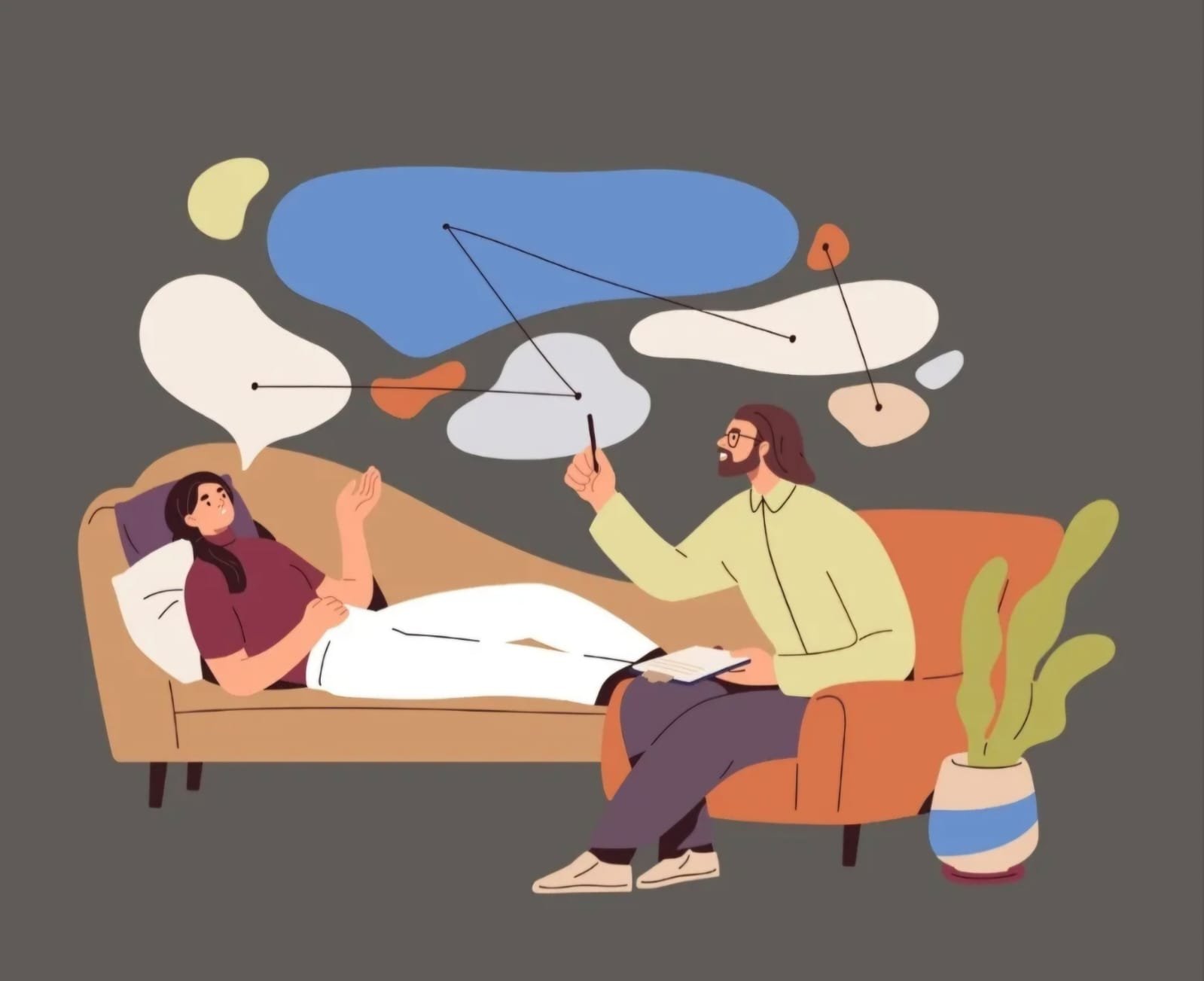
When most people think of therapy, they picture a quiet room, a therapist, and a client talking about their feelings. It feels like a deeply personal space, separate from the noise of the outside world. But here’s the truth: therapy does not exist in a vacuum. Every client walks into the room carrying not just their inner struggles, but also the weight of society, culture, and history.
Think about it:
A gay man told by relatives that his love is “unnatural” and “against what God intended.”
A Dalit student dismissed with, “You must have gotten here through reservation, not merit.”
A woman discouraged from pursuing her career because “ghar ka dhyaan rakhna is more important.”
A trans person repeatedly asked, “What were you before?” as if their identity needs justification.
These are not random anecdotes. These are everyday realities in India. And the feelings that arise from such experiences — anxiety, hypervigilance, shame, or exhaustion — are not symptoms of an “illness” to be pathologized. They are valid emotional responses to systemic oppression. If therapy ignores this, it risks mislabelling survival as a disorder.
Therapy cannot be neutral in a world where power, privilege, and hierarchy shape everyday lives. Saying “therapy is political” doesn’t mean it’s about taking sides in politics. It means therapy must recognize that inequality, unfairness, and oppression in society affect people’s mental health. Hypervigilance and anxiety, for example, may be a textbook “symptom” in psychology manuals. But for a queer individual navigating constant scrutiny, or for a lower-caste student anticipating discrimination in classrooms and workplaces, hypervigilance is not irrational; it is an adaptive survival response.
When therapists hold this perspective, therapy becomes less about “fixing what’s wrong with the individual” and more about validating their reality and supporting resilience in the face of systemic harm.
Privilege often hides in plain sight. For those who have it, it is invisible. A cisgender, upper-caste, able-bodied person might never notice how seamlessly the world accommodates them. They can walk into a clinic and expect to be addressed respectfully, find doctors who speak their language, walk into a room and not be seen differently, or simply never worry about being denied housing because of their surname or gender identity.
For those without privilege, every step into a new space carries uncertainty: “Will I be safe here? Will I be judged? Will I be silenced?”
Therapy must become a space where privilege is not brushed under the rug but actively examined. Clients should not have to explain or defend their struggles with systemic barriers. Instead, the therapist must take responsibility for creating inclusive, affirming, and bias-aware spaces.
Good therapy doesn’t stop at listening to the story; it asks, “What systems shape this story?”
A client struggling with body image in a culture that equates beauty with fairness. A man unable to cry because masculinity has always been defined for him as “mard ko dard nahi hota.” A differently-abled person battling not their condition, but the inaccessibility of public spaces and the pitying stares of strangers.
To heal, we must look at both the personal and the political.
Therapy itself has power dynamics. The therapist often carries privilege in the room — through education, class, caste, or gender. A conscious therapist must actively minimize hierarchy, co-create equality in the relationship, and consistently check their own biases and assumptions to avoid causing unintentional harm.
But the responsibility doesn’t stop within the room. We must also ask: who even gets access to therapy? In India, therapy is still expensive and concentrated in urban centers, making it inaccessible to marginalized communities. If therapy is only available to the privileged, it risks reinforcing inequality instead of dismantling it. This is why therapy must move hand-in-hand with advocacy, activism, and community-based care.
Much of mainstream psychology is rooted in Western frameworks. But healing cannot be “one-size-fits-all.” Decolonizing therapy means integrating models that fit the client’s culture, identity, and lived reality, rather than forcing clients into rigid frameworks designed in contexts far removed from their own.
For some clients, spirituality, prayer, or storytelling may be more grounding than CBT worksheets. For instance, a divorced older woman navigating loneliness might find strength in evening bhajans, temple visits, or narrating stories of resilience from her own life. These practices can provide her with a sense of belonging and healing that worksheets or structured activities may not.
For others, empowerment-based frameworks that challenge internalized oppression resonate more than silence and neutrality. A corporate professional who uses a wheelchair may feel dismissed when people constantly say, “You’re so inspiring just for showing up.” In therapy, what supports him isn’t neutrality but a space where he can unpack this subtle ableism and build a sense of identity beyond pity or tokenism.
For many, therapy must be more than “non-judgmental listening”; it must be active solidarity. Non-judgmental listening is like offering someone an umbrella in the rain — it provides comfort and shows care. But active solidarity is standing with them in the storm, naming the rain, and working together to find shelter. For a queer client facing constant homophobic remarks, or a Dalit student being told “people like you don’t belong here,” it is not enough to simply listen and nod. A therapist in solidarity validates that the storm is real, that systemic oppression is not a product of their own imagination, and collaborates with the client to resist internalized shame, reclaim their identity, and build resilience.
Therapy that acknowledges systemic oppression is not about shifting all responsibility onto society and leaving none with the individual. Instead, it’s about balance. It is about creating a space where clients feel deeply seen — not just as people with “symptoms,” but as individuals navigating unequal systems.
As therapists, our responsibility is two-fold:
Firstly, to support clients in making meaning, healing, and reclaiming their voice.
Secondly, to examine ourselves — our privileges, biases, and blind spots — so that therapy becomes a space of liberation, not another site of oppression.
Therapy is not just about helping people cope; it is about helping people live fully, in a world that doesn’t always make that easy. When therapy engages with power, privilege, and context, it moves from being a silent room to becoming a small act of resistance, advocacy, and hope.
Because healing is never just personal. Healing is political.