
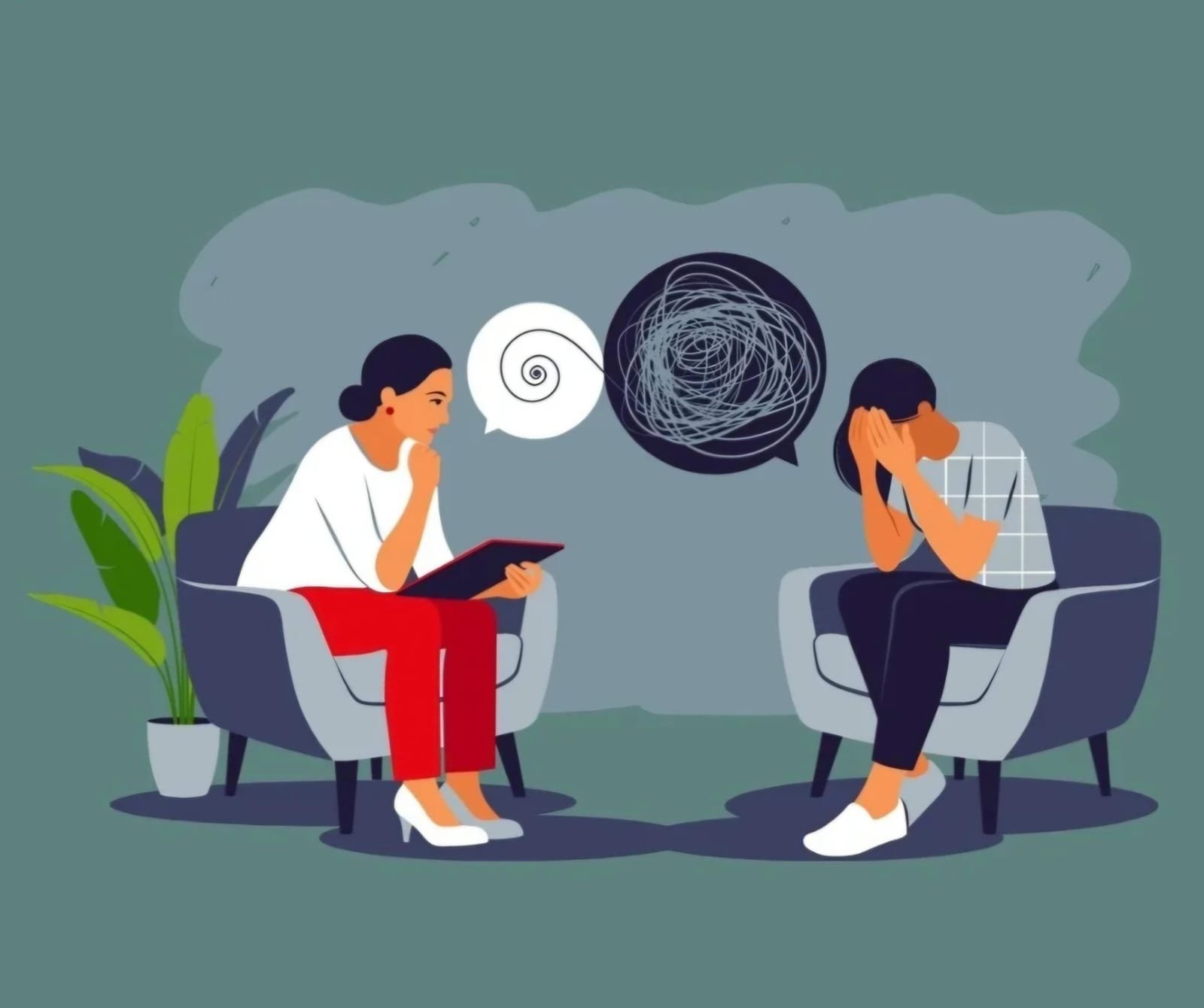
When people imagine a therapist, they often picture someone endlessly calm, wise, and put-together; a figure who never stumbles, never missteps, basically, Buddha with a notepad sitting across the room. For many, therapists sit on a pedestal: they are expected to be neutral, endlessly patient, and somehow immune to the very struggles they help clients navigate.
But here’s the truth: therapists are human too. We’re not programmed like AI to always say the perfect thing. We can stumble over words, misinterpret a silence, or carry the weight of our own lived experiences into the room. And that’s not a failure — it’s a reminder that therapy is not about perfection, but about connection.
In cultures like ours, we’re often taught to worship authority figures, whether it’s teachers, doctors, or spiritual leaders. That same tendency carries into therapy. Clients may expect therapists to “fix” them, to always know better, or to act as moral compasses. This creates unrealistic expectations for both clients and professionals.
This expectation is understandable, especially when someone seeks therapy at a vulnerable point. But putting therapists on a pedestal can be harmful. It creates unhealthy power dynamics, where the client feels smaller or dependent rather than empowered. It avoids responsibility, because if the therapist is the “all-knowing guide,” the client might assume change depends entirely on them. It sets up inevitable disappointment, because no therapist can live up to godlike perfection.
When clients see therapists as unfailing, they may hesitate to question them or to disagree, missing out on the collaborative heart of therapy.
As Carl Rogers, the founder of person-centered therapy, emphasized: healing happens in an environment of authenticity and equality, not hierarchy.
Yes, therapists can make mistakes. They might misread a client’s tone, assume too much, or ask a question that lands badly. Being human doesn’t mean being unprofessional. It means acknowledging that therapy is a relationship between two people. What matters is how they repair and learn from that moment, often deepening trust. Therapists carry their own histories, cultures, and struggles. Sometimes, their humanity — like sharing a small personal challenge or showing genuine emotion — helps clients feel less alone. In fact, research suggests that when therapists acknowledge and repair ruptures, instead of defending themselves, the therapeutic relationship often becomes stronger.
When therapists slip up, the most powerful response isn’t to defend themselves but to approach the moment with curiosity. “How did that land for you?” or “I realize I might have misunderstood; would you like to tell me more?” This humility makes therapy safer because it acknowledges the client’s perspective as central.
Many therapists worry: “If I admit uncertainty, will I lose credibility?” But in reality, authenticity strengthens the therapeutic alliance. Being human in the room doesn’t mean oversharing or blurring boundaries. It means showing warmth, admitting when something didn’t land right, and sometimes saying, “I don’t know, but we can figure it out together.”
This models a healthier relationship dynamic: one where imperfection is not shameful but part of growth. Clients often find it comforting to know that healing isn’t about “getting it right all the time” — it’s about staying engaged even when things feel messy.
Every client comes to therapy carrying their unique struggles — anxiety, grief, trauma, and self-doubt. But therapists, too, walk their own journeys. We’re constantly learning, unlearning, and reflecting on our biases. We grapple with uncertainty, with our own vulnerabilities, and with the reality that we don’t have all the answers.
In this sense, therapy is not a one-way street. It’s two humans walking side by side: one sharing their story, the other holding space, both discovering something new in the process.
For clients, seeing the therapist as human can be liberating. It reminds them that therapy is not about passively receiving wisdom, but about actively co-creating healing. It encourages honesty: “I didn’t like it when you said that.” “I need more space to process.” It makes therapy less about performance and more about partnership. For therapists, embracing humanness reduces burnout. The pressure to “never make mistakes” often leads to guilt and shame. Instead, seeing mistakes as learning opportunities makes therapy sustainable.
Therapists aren’t from Krypton with superpowers who never slip up. They’re humans with strengths, limitations, and ongoing journeys of their own. And perhaps that is exactly what makes therapy powerful. Not the illusion of perfection, but the presence of authenticity. Because at the end of the day, healing is never about perfection — it’s about two humans daring to show up, together.