What does it mean to live in a world where beauty and worth are often judged by appearance? For many people with visible differences or chronic conditions, this question is not abstract but deeply personal. I am here to bring a narrative both from the perspective of a person in the mental health profession as well as someone who was once labelled as “abnormal.” I live with alopecia, a visible autoimmune condition that makes me look different from what society considers “normal,” especially for women in India. This lived experience, coupled with my training as a psychologist, gives me a unique lens through which I view mental health, identity, and therapy.
Growing up with this autoimmune condition, where the body loses all hair, I found myself constantly navigating a society that equates femininity with long, flowing hair. In India, especially, hair is not just seen as an accessory but as a cultural marker of beauty, desirability, and identity. It led to an identity crisis, a constant internal battle of trying to fit into a box that was never built for me.
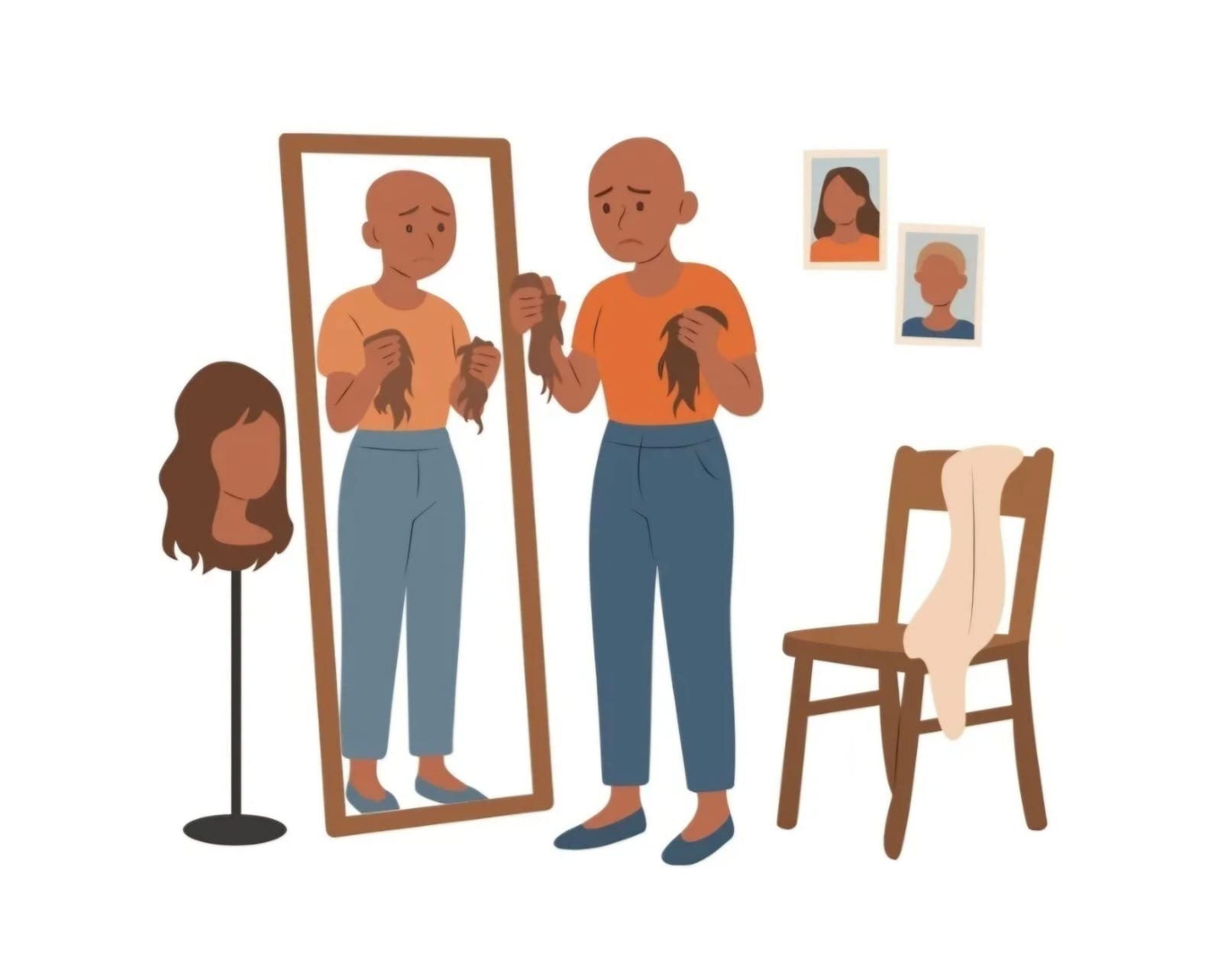
As an individual, this shaped much of my self-esteem. I often felt like I was standing outside the box of “acceptable” femininity. My reflection reminded me of the difference every single day, and over time, that difference became tied to self-doubt, insecurity, and even self-hate. Yet as a psychologist-in-training, I now understand that these feelings were not just about me. They were the product of larger cultural narratives, social standards, and systemic ideas of beauty that devalue difference.
People living with visible differences or chronic conditions face layered challenges. On an individual level, self-esteem and body image often take the hardest hit. The mirror can feel like an enemy. Small acts, like entering a social gathering or taking a photo, can trigger deep feelings of being “less than.”
On a social level, the challenges are magnified by stigma. For me, questions like “What happened to your hair?”, “Why don’t you try a wig?” or “Have you tried this medicine?” became everyday encounters. These questions weren’t just about curiosity; they reflected society’s discomfort with difference and its push to “fix” anything that falls outside the norm. For many, this constant spotlight fosters shame and silence.
As I navigated this, I also noticed how therapy itself wasn’t always equipped to hold my experiences. I couldn’t find a therapist with whom I truly connected, because I knew they might not be able to provide the space I needed. Many therapeutic practices are based on Western assumptions of self, individualism, normality, and pathology. Models like CBT or rigid DSM-based diagnoses don’t always account for the nuanced struggles of people who don’t necessarily meet the criteria for a mental disorder but are still labelled as “abnormal” by society.
From the lens of a psychologist-in-training, I see how these experiences echo what research tells us: visible differences often result in higher risks of anxiety, depression, and social withdrawal. Yet mainstream therapeutic models rarely center this lived reality. Too often, therapy treats body image distress as an “individual problem” to be corrected, rather than a reflection of cultural and social structures that stigmatize difference.
Being trained in psychology, I realized how much we are taught about conditions that make someone “deviant from the norm”, but not how to hold space for those who live at the margins of societal expectations. Adopting therapeutic techniques solely rooted in Western narratives, without considering culture, context, and lived experience, risks overlooking the real voices of people. This is where the need for a decolonised lens in psychotherapy becomes urgent. Therapy must go beyond diagnosis and symptom reduction; it must also allow individuals to reclaim their narratives within their cultural realities. A decolonised psychotherapy makes space for this reclamation. It validates differences, challenges oppressive norms, and empowers individuals to find meaning beyond appearance.
For me, the journey has been about reclaiming my identity and seeing myself through my own eyes, not through the distorted lens of societal standards. Alopecia, while painful in its own ways, has also made me kinder, more empathetic, and more open to differences in others. I began to see how important it is to break stereotypes, not only for myself but for others who, like me, were made to feel “less than.” When someone enters therapy carrying shame about their body or appearance, I can meet them with more than just textbook empathy. I can meet them with lived resonance. I know the silence, the sting of judgment, and the exhausting pressure to “fit in.”
This dual lens, both as someone who lives with alopecia and as a psychologist-in-training, is what I now bring into my work. I hope to create spaces where people with visible differences, chronic illnesses, or unique identities feel seen, validated, and heard — not as “cases” to be treated, but as individuals with rich narratives deserving of dignity.
“You can’t love what you don’t know.” For years, I didn’t know how to love myself, because no one had ever taught me to embrace every part of my being without fault-finding. Today, I stand for those who need someone they can identify with, someone who can remind them that they are not broken. I hope to help people find the courage to love themselves just as they are — fully, deeply, and unapologetically.